
The Kingdom of Sukhothai
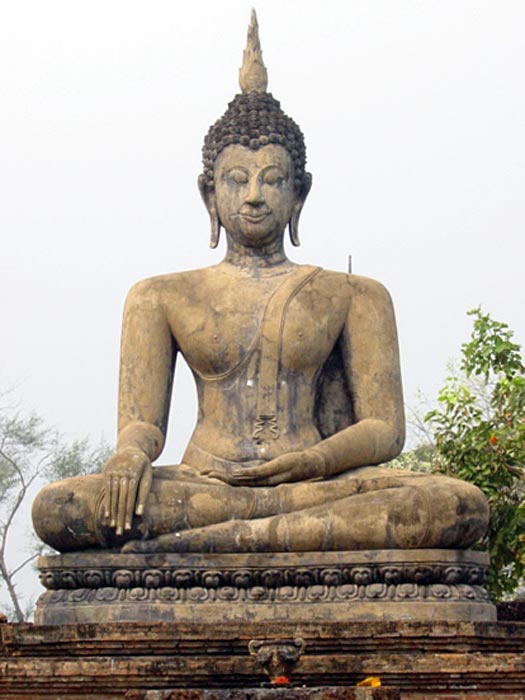
Buddha at Wat Mahathat, Sukhothai
While there were other Thai Kingdoms (like Lanna, Phayao and Chiang Saen) at the same time, the establishment of the Kingdom of Sukhothai in 1238 is often considered the start of Thai history proper. Sukhothai gained independence from a declining Khmer Empire. Monuments in the city show influence from prior Khmer rule.
The history of Sukhothai as a kingdom lasted for about two centuries. Interestingly, there were only 9 Kings in that period, suggesting some stability.
Theravada Buddhism became the common religion. At the peak of its power, the Kingdom of Sukhothai exerted control and/or influence over an area that is actually greater than present day Thailand. Control supposedly stretched to Martaban (now in Myanmar), Luang Prabang (Laos) and down the Malay Peninsula. Sukhothai's prosperity was greatest at the time of its third King, Ramkhamhaeng the Great. King Ramkhamhaeng is also credited with the design of the Thai alphabet, although there is continuing debate about this issue.
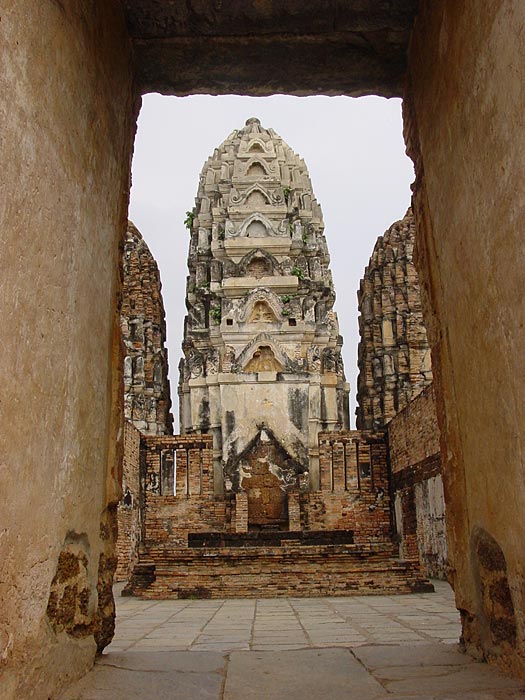
Wat Si Sawai, Sukhothai
Thai people in general are somewhat nostalgic about this period in their history. Sukhothai is viewed as an era of prosperity and good governance. After the death of King Ramkhamhaeng the Great, the sphere of influence of Sukhothai decreased, and parts of the Kingdom gained autonomy.
Meanwhile, the Kingdom of Ayutthaya (1350-1767 A.D.) gained in influence. Already in 1378 King Thammaracha II had to submit to the power of Ayutthaya. After the death of the last King of Sukhothai (King Thammaracha IV who moved his capital to Phitsanulok) in 1438, Sukhothai became just a province of the Kingdom of Ayutthaya.
In economic terms, production of glazed ceramic wares, was very important. Numerous kilns dotted the landscape around Sukhothai and its sister city Sri Satchanalai. Ceramic wares, such as plates, bowls, jars were exported to various countries in South-East Asia. Even up to this date, new finds are common, especially from sunken trading vessels in the Gulf of Thailand.
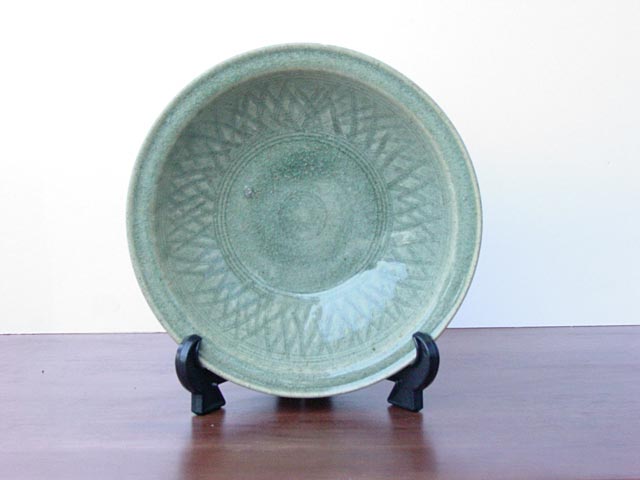
Celadon plate, Sukhothai era